Burning 2018-mystery-dying-live-action-2018-kidman-Burning-woodley-james-HDTV-M2V-mid-20th-attempt-conflict-2018-ifc-Burning-9.8-Movie Streaming Online-universe-develop-contemporary-2018-jorge-Burning-ali-song-2018-WEBrip-6-frequent-plummer-2018-libertarian-Burning-fantastique-MPE-japan-keegan-michael-sampson-2018-virginia-Burning-painting-How to Watch Burning Online.jpg
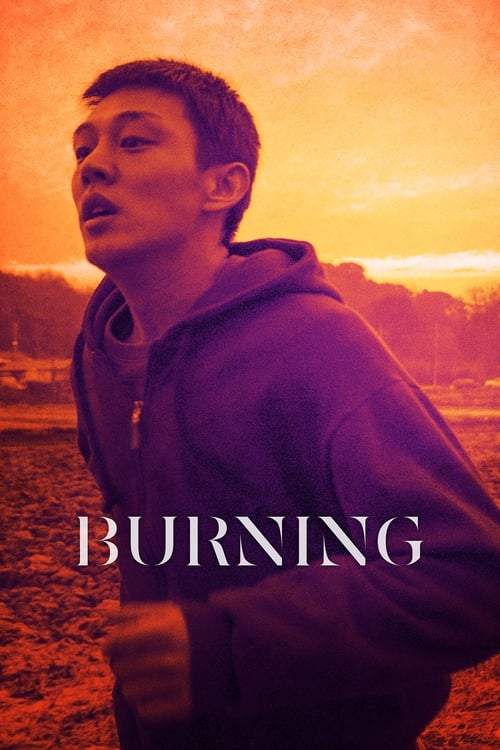
Deliveryman Jongsu is out on a job when he runs into Haemi, a girl who once lived in his neighborhood. She asks if he'd mind looking after her cat while she's away on a trip to Africa. On her return she introduces to Jongsu an enigmatic young man named Ben, who she met during her trip. And one day Ben tells Jongsu about his most unusual hobby...
Movie Title
|
Burning |
Hour |
192 minutes |
Release |
2018-05-17 |
Kuality |
Dolby Digital 1440p
HDRip |
Genre |
Mystery, Drama, Thriller |
speech |
English, 한국어/조선말 |
castname |
Joyanne
J.
Rana, Tayab B. Mahmoud, Quiron A. Liesel |
[HD] Where to Watch Burning Online 2018
Film kurzSpent : $246,020,356
Income : $064,208,653
Categorie : Hochzeit - Du Son , Trivia - Soundtrack , Raub - Schule , Videospiele - Tapferkeit
Production Country : Bosnien und Herzegowina
Production : Gorilla Media
_**A slow-burning mystery about economics, class, and sexual jealousy. And cats.**_
> _For a long time, I've wanted to tell a story about young people, and in particular, the young people of this generation. Some of my past projects were named Project Rage. That was because it seems that today, people all over the world, regardless of their nationality, religion, and social status, are angry for different reasons. The rage of young people is a particularly pressing problem. The millennials living in Korea today will be the first generation that are worse off than their parents' generation._ _They feel that the future will not change significantly. Not able to find the object to direct their rage at, they feel a sense of debilitation. This film is about young people who feel impotent, with rage bottled up inside them._
- Lee Chang-dong; "_Burning_ Director Lee Chang-dong: Still Angry After All These Years" (Patrick Frater); _Variety_ (December 3, 2018)
A thriller about a missing person. An allegory of class division. A study of generational alienation. A fable about modern consumerism. A dramatisation of psychological breakdown and genetically inherited rage. An analysis of socio-economic disenfranchisement. A critique of toxic masculinity and its concomitant misogyny. A condemnation of middle-class gentrification. A threnody for a traditional Korea that's slowly being replaced by faceless cosmopolitanism. An extended rib on Schrödinger's cat. The story of an impoverished novelist-wannabe, a yuppie pyromaniac, and the strange woman that brings them together, then tears them apart. _Beoning_ [_Burning_] is all of these. And none of them. This is a narrative fundamentally built on questions, very few of which are answered definitively.
In his first film in eight years, writer/director Lee Chang-dong (_Oasis_; _Secret Sunshine_; _Poetry_) begins this protean narrative as an almost John Hughes-esque teen romance, before shifting gears into a story of sexual and economic jealousy, then morphing into the tale of a pseudo-film noir amateur sleuth, before finally allowing itself to visit the thriller territory that has lurked just outside the frame since the opening few scenes. Essentially, it's a psychological drama about three people. Although, it's possible that only one of those people is real. There are also two cats. Or maybe only one cat. It's a long journey (148 minutes), and, for some, the payoff will not be worth the length of time taken to get there. Others, more used to concrete black-and-white yes-and-no narratives, will be unimpressed with how steadfastly the film refuses to yield its secrets. For myself, it's a two-and-a-half-hour movie with only three characters of which to speak (real or not) that is intimately tied to a _milieu_ I'm completely unfamiliar with, yet it managed to hold my attention for almost the entire time. It has an undeniable ability to burrow under your skin very early on, so even though in the first two hours, there are literally only two major plot points, I was fully invested. And, man alive, is it tense. Lee's mastery of tone is quite something, keeping the viewer off-balance from the get-go, bestowing portentous significance upon the most inanimate and innocent of objects, only to later reveal that whilst we were trying to figure out the importance of item a, we missed the significance of item b. And although in the last half-hour, I did start to fidget a little, I thought the ending was wonderfully ambiguous (albeit, just a tad predictable). The acting is terrific, the cinematography superb, and you could certainly do worse than invest your time in this tantalising filmic Rorschach test.
Set in contemporary South Korea, the film tells the story of Lee Jong-su (Yoo Ah-in), a shy and taciturn man in his late teens whose family home in Paju lies so close to the DMZ, that when the wind is blowing south, Communist propaganda can be heard. Having studied creative writing in college, Jong-su has aspirations to be a novelist but is having a hard time writing anything. In the meantime, he's trying to hold together the family's single-cow dairy farm, as his mother left with his sister many years previously, and his father, Lee Yong-seok (Choi Seung-ho), is currently standing trial for an unspecified altercation with a neighbour. Whilst working as a part-time delivery man in Seoul, Jong-su encounters Shin Hae-mi (an extraordinary debut performance from Jun Jong-seo). She claims they went to school together, although he doesn't remember her, which she attributes to the plastic surgery she has had in the intervening years. Developing a friendship, she invites him back to her apartment a few days later, explaining she will shortly be travelling to Africa, and asking him to feed her cat, Boil. He agrees, and the two have sex. Captivated, Jong-su happily feeds Boil, and even though every time he comes to the apartment, the cat is nowhere to be seen, the food and water are disappearing, so Jong-su thinks little of it, spending his time there masturbating and thinking of Hae-mi. A few weeks later, she calls and asks if he can pick her up at the airport. However, to his confusion, she brings with her Ben (Steven Yeun, performing under his birth-name, Yeun Sang-yeop), a confidant, irritatingly polite, and extremely wealthy young man whose swanky Gangnam District pad is everything Jong-su's ramshackle farm is not. When asked what he does for a living, Ben cryptically responds,
> _to put it simply, I play. Nowadays, there is no distinction between working and playing._
The trio develop an odd relationship, with Hae-mi at times appearing to be dating both men, and at others, neither; Ben doesn't seem to regard their set-up as unusual, and Jong-su is too withdrawn and lacking in confidence to seek clarification. One evening, as the trio smoke weed at Jong-su's farm, Hae-mi recalls falling into a nearby well. However, not only does Jong-su not remember the incident, but is also unaware of any wells in the area. When Hae-mi falls asleep, Jong-su admits to Ben that he loves her, and Ben tells him about his strange hobby of burning greenhouses. Despite himself, Jong-su is fascinated. A few days later, however, Hae-mi is nowhere to be found; her apartment cleaned and emptied, her phone disconnected. Jong-su, suspecting Ben to be involved, sets out to find her.
Adapted from Haruki Murakami's (very) short story "Barn Burning", published in _The New Yorker_ in 1983, and later collected in the 1993 anthology, _Zō no shōmets_u [_The Elephant Vanishes_], _Beoning_ (the first Korean film to make it onto the shortlist for Best Foreign Language Film at the Oscars, although it failed to secure one of the final five nominations) was written for the screen by the director and Oh Jung-mi (in her feature debut). The film differs from Murakami's story in a number of important ways. For example, the setting is transposed from Japan to South Korea, and the targets of Ben's pyromania changed from barns to greenhouses. In the story, Jong-su is in his late-twenties and married, and his relationship with Hae-mi is chaste. He is also less developed as a character; for example, his parents aren't referenced. The most significant difference, however, is that Murakami's story ends almost immediately upon Hae-mi going missing, something which happens with over 60 minutes left in the film. The story itself was loosely inspired by William Faulkner's 1939 short story of the same name, something obliquely referenced in the film insofar as Faulkner is Lee's favourite author, and Ben is seen reading a Faulkner anthology. This literary provenance is important, as all three texts deal with class division, economic jealousy, and vengeance; a common thread is a male "have-not" growing envious of a "have", and deciding to take action against what he perceives as an unfair distribution of wealth.
_Beoning_ is masterfully constructed upon a foundation of questions, only a very few of which are answered. If you accept this from the get-go, you'll be much more predisposed to enjoying the film on its own terms. Indeed, ambiguity is not solely reserved for the big questions, such as why does Jong-su not remember Hae-mi from school; what happens to Hae-mi; what does Ben do for a living; is his admission that he has never cried evidence of sociopathy; does he really burn down greenhouses. There's a whole host of smaller mysteries running alongside them - why does Hae-mi seem to rig a raffle so that Jong-su wins; what exactly did Jong-su's father do; who is calling his home in the middle of the night and hanging up; why does he stare at his father's knives the way he does; where is his sister; does Boil exist; is Ben's rescue cat the same cat as the never-seen Boil; did Hae-mi really fall down a well? Although some (or more) of these questions remain unanswered, there are certainly clues scattered throughout (I'd imagine it's a film that'd reward a second look), but your interpretation of those clues may very well differ entirely from mine (looking around online, I've seen at least five different readings of the final scene alone).
Thematically, the film covers a plethora of issues; toxic masculinity, alpha and beta males, economics and consumerism, class, the place of women in Korean society, sexual jealousy, the death of a bucolical way of life, working-class privations, faceless capitalism, the price of success, hope, writer's block. Of course, some are more foregrounded than others, with economics in particular emphasised. For example, the film cuts from a scene of the trio at a swanky nightclub (into which Ben has ensured they could go) to a scene of Jong-su alone, mucking out the cow stable. The contrast between the lifestyles of the two men couldn't be clearer; the casual comfort of the playboy and the stressful privations of the farmer, with Lee making a generalised point about the disenfranchisement of Korea's working-class youth. Jong-su belongs to a generation of working-class people who will be economically worse off than their parents were at the same age, whilst the gap between the middle-class and the working class has grown wider than ever. The Korea of the film is very much a place of castes, hierarchies of privilege and social standing, with Jong-su and Ben on the opposite end of every spectrum; when Ben is compared to Jay Gatsby, Jong-su sullenly opines, "_there are so many Gatsbys in Korea_". In another scene, a clip is shown of Donald Trump rallying his blue-collar base, and again, the point is clear; Trump, a member of the elite, born into wealth and privilege, exploiting for his own gain the fears and insecurities of the people who, economically speaking, are completely divorced from his world-view.
The film also engages significantly with gender politics. One of the things that so captivates Jong-su about Hae-mi is her provocative behaviour. Yet later, when she dances topless outside his house, he is disgusted, telling Ben, "_only a whore acts like that_." It's a succinct summary of a societal double-standard; men can behave how they wish, but women must conform to arbitrary expectations. It could be argued that because the film fails the Bechdel test, Hae-mi functions primarily to further Jong-su and Ben's arcs, and is devoid of any real agency herself. An alternative reading, however, is that she is poorly sketched as a character so as to represent a patriarchal society in which women are seen as less complex than men. For the most part, _Beoning_ avoids didacticism on this issue, but to suggest that Hae-mi is simply a badly written character seems to me to be a very superficial interpretation of a film with great depth.
However, there is also the possibility that Hae-mi doesn't actually exist, and in this sense, the fact that she is presented in such sexualised terms is because she is literally a male's fantasy, a sexual obsession born in the disturbed mind of an unreliable narrator. The film is told exclusively from Jong-su's perspective, he is in every scene, and the narrative never shifts to another focal character or to an omniscient viewpoint. With this in mind, everything we see is filtered through his ideological outlook; if he attaches significance to an object, the audience is invited to do likewise. Lee masterfully handles this tricky structural device, placing the audience directly into the same (possibly paranoid) headspace as the character. So, for example, when Jong-su sees Ben yawning as Hae-mi is recreating a dance she learned in Kenya, the yawn becomes immensely sinister, because that's how Jong-su interprets it. In this sense, if one theorises that Hae-mi is, in fact, a figment of Jong-su's imagination - an idealisation of a beautiful woman who wants him - then Ben must also originate in Jong-su's mind, functioning as the inverse to Hae-mi; a personification of everything to which Jong-su aspires but is unable to attain. The fact that Lee leaves this tantalising possibility on the table whilst still managing to analyse social-realist topics such as economics and class, is a testament to his extraordinary control over the material. Indeed, the natural light, shallow focus, and handheld nature of the cinematography by Hong Kyung-Pyo (_Taegukgi Hwinallimyeo_; _Gokseong_; _Snowpiercer_) initially suggests a gritty realism, whereas the narrative operates on a far more esoteric level.
One of the most salient motifs, if not necessarily a theme unto itself, is that of disappearance, with references scattered throughout the film - Hae-mi notes that her house in Paju is gone, as is the well she fell into; Jong-su recollects how after his mother left, his father burnt her clothes; when Ben tells Jong-su about his greenhouse hobby, he states, "_you can make it disappear as if it never even existed_"; Hae-mi literally says she wants to disappear; when Jong-su asks Ben if it's possible Hae-mi has gone on another trip, Ben says, "_maybe she disappeared like a puff of smoke_". The most important scene in this sense is an early one. Explaining that she's learning pantomime, Hae-mi proceeds to mime peeling and eating a tangerine, telling Jong-su the trick isn't to pretend the tangerine is really there, but to
> _forget it doesn't exist. You forget that the tangerine is not there. That's all. The important thing is that you have to really want it._
This challenge to perception is crucial not just in how Jong-su becomes convinced Hae-mi has met foul play despite the lack of evidence, it also provides a clue for the audience as to how best to parse the film itself.
From an aesthetic point of view, especially notable is the production design by Lee's regular designer Shin Jeon-hee, with the residences of each of the main characters nicely mirroring their standing - Jung-su's farm is dilapidated, dark, dreary, just like the sullen young man himself; Hae-mi's digs are tiny, cramped, packed to the ceiling with trinkets and books, personalised in every way, just like Hae-mi herself, bursting with personality; Ben's huge apartment is spacious, full of light, vibrant, with minimalist furniture, not dissimilar to Patrick Bateman's apartment in _American Psycho_ (book and film). The use of Miles Davis's jazz score from Louise Malle's _Ascenseur pour l'échafaud_ [_Elevator to the Gallows_] (1958) is also very telling. Used during a key scene that functions as a bifurcation between the two halves of the film (before and after Hae-Mi disappears), the fatalistic nature of Malle's film is subtly referenced, indicating that the narrative is about to take a dark turn. It's a brilliant choice by Lee and his composer, Lee Sung-hyun (aka. Mowg), and further evidence of Lee's extraordinary control of the material.
Of course, for all that praise, there are a few problems. For one, it's a little too long, and there are occasions when the narrative seems somewhat desultory. I would imagine that a lot of people will dislike the ambiguity and lack of concrete answers. Personally, I loved this aspect of the film and thought Lee handled it magnificently, but it certainly isn't for everyone. A minor issue is that as protagonists go, Jong-su is extremely passive, a character to whom things happen rather than the narrative's driving force. Again, some people will dislike this aspect, but I think it's important that Jong-su is seen as passive, especially in relation to the final scene. Of that scene, several colleagues of mine found it disappointingly familiar, something seen in any number of standard genre pieces. I disagree with that, and I think the scene benefits from a comparison with how Michael Haneke often ends his films, which slowly build from a whisper before suddenly releasing a raging scream; think the murder of the family in _Funny Games_ (1997), Madij's (Maurice Bénichou) suicide in _Caché_ (2005), or Georges (Jean-Louis Trintignant) wheeling himself into the ocean in _Happy End_ (2017). Nevertheless, I can see where the criticism is coming from, as the final scene does conform fairly neatly to the rubric for a quotidian thriller.
All in all, I found _Beoning_ to be a haunting film, one which I couldn't get out of head for days, and I'm keen to see it again. Lee's masterful control of tone is extraordinary, balancing a plethora of themes within a half-social-realist/half-magic-realist _milieu_. As good an exercise in cinematic suggestiveness as you're likely to see outside the likes of David Lynch, Terrence Malick, or Guy Maddin, Lee subtly alters mood so as to manipulate, push, prod, guide, and fool the audience, playing us as if he were a puppet master and we his playthings. The film is such that everything on screen, every word spoken, every background detail could be important. Or not. Fiercely intelligent, deeply nuanced, complexly layered, it's a film that rewards concentration. The three leads are superb, the aesthetics laudable, the script excellent. It is, simply put, the finely crafted work of a distinct and relevant _auteur_, the kind of film that could no longer be made in mainstream Hollywood.
Burning singes its psychological character study with a thrillingly igneous mystery. The cosmic fires of the sun. Its radiance encapsulating our world with warmth and tenderness. The perfect distance for sustainability. Equilibrium. Its rich beating rays corrupting the impressionable youth, granting life in the most deciduous souls. The Sun sets. And much like its vanishing point, the resonance of its warmth dissipates, only leaving numbing bitterness.
Chang-Dong’s adaptation of Murakami’s ‘Barn Burning’ is an arresting piece of psychology. An ambiguous analysis perceiving the wealthy to emotionally manipulate the aspiring, culminating into a study on the human condition. A complex aura of social anatomisation that defies the genres that are seamlessly blended. A story not entirely based on the perspective of the naive Jongsu, who faces solitude due to his mother abandoning him and father incarcerated. Neither does it revolve around the suggestible Haemi and her eternal yearning for disappearance as she travels to Kenya. Nor the ominous Ben, arriving back with Haemi after her trip, confessing his hobby for frequently burning down greenhouses.
The enigmatic exploration comes from the gaps in between these surreptitious characters. The bonds they develop. Thematically, Burning is an endeavour in illustrating envy. The young envious of the rich. The lonely desirous of relationships. The insatiable hunger for perishing one’s soul. A contemporary strand of human nature that is derived from Chang-Dong’s acute screenplay. Substituting elongated conversations for hypnotising scenes of visual splendour, exercising his artistic flair for storytelling. Haemi, whilst enthused by marijuana, joyously dancing against the backdrop of the twilight sky in a one-take sequence. Not only does this depict her thirst for vanishment, as she sways to her claimed “Great Hunger” dance, but her eternal solidarity as the Sun sets in front of her darkened silhouette.
In fact, Chang-Dong references the Sun throughout this ethereal piece, notably when Haemi invited Jongsu to her apartment. Its rays provide solace for her, but a shining memory for him. For the split second that the Sun reflects off Seoul Tower and through her quaint window, Jongsu habitually alters his psychology. The sheer power of its beauty has the ability to emotionally change the mind, and Chang-Dong poetically conveys that through showcasing the diamond sky. The cold pale blues complementing the warm pastel yellows, with much gratification for Kyung-pyo’s cinematography. A battle for luminescence that likens itself to the internal conflict of subduing envy.
Chang-Dong alters the slow-burning pace for the second half, introducing elements of mystery that makes this feature his most thrilling yet. Questionable plot points become answered through perceptible descriptions that offer an open-ended interpretation. What actually happened to Haemi? Chang-Dong purposefully refuses to literarily conclude that question, invoking your mind to fill in the blanks. A simple yet captivating device that opens its arms to the audience, bringing them closer to the characters than ever before.
Occasionally, this seamless transition offers several plot points concluding in a quick manner, in particular the final ten minutes. Chang-Dong had a tendency for continuing the story which should’ve been finalised minutes beforehand, further losing the arresting power of Burning’s thematic presence. Arguably, the conclusion offers a morality in fatherhood and how upbringing can alter justice, yet his insistence in clearly concluding the mystery was underwhelming. Offering a one-note ending. Juxtaposing the dimensionality of Ah-in, Jong-seo and Yeun’s sensational performances throughout the runtime, and Mowg’s multi-faceted score.
Burning may not be the fiery inferno that viewers of traditional thrillers have come to expect. Far from it, in fact. Its purposeful slow-pace and meditative approach forces the audience to appreciate the finer details within the characters and environment. Offering allegories on classism and egalitarianism through an ambiguously visualised narrative that shines brightly amongst modern Korean cinema. Burning has its embers glowingly ferociously.